Green shoots for cannabis industry as revenues soar
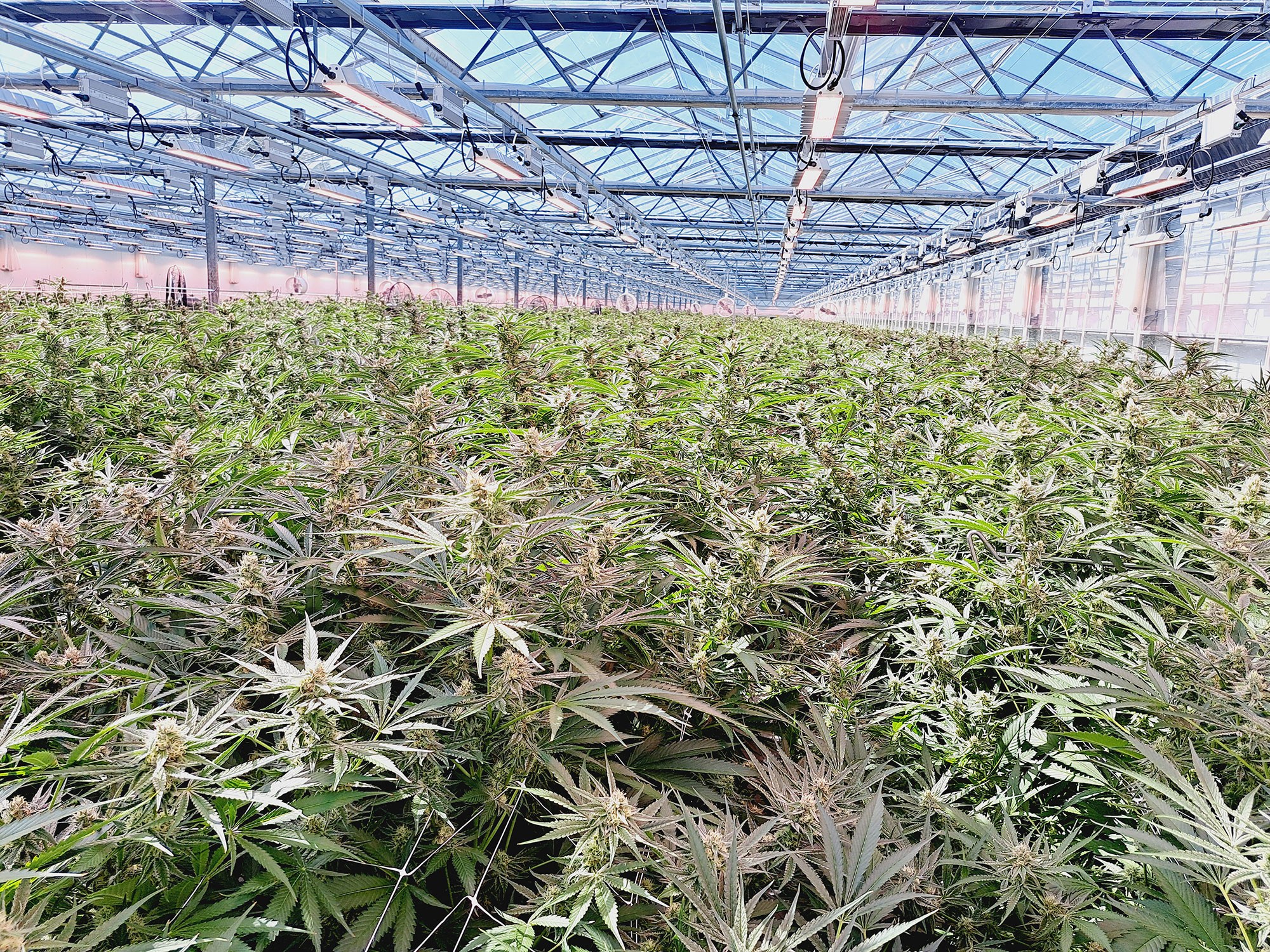
A Jersey medicinal cannabis producer that was on the brink of collapse less than a year ago says it has tripled its production and is now on track to hit record revenue – in a sign that the Island’s cannabis sector may be stabilising after a string of setbacks.
Northern Leaf chief executive Steven Tan said the company’s production has jumped from 25% to 75% of capacity in less than a year as demand for medical cannabis grows in Europe.
“Our order book is full and we’re selling pretty much everything subject to contract, so it’s really positive,” he said.
The company, which operates out of a 100,000‑sq‑ft indoor cultivation centre in St Lawrence, exports 95% of its high‑THC medical cannabis to Europe and is not linked to medical cannabis clinics in Jersey.
Mr Tan, who has worked in the cannabis industry for more than two decades, joined Northern Leaf in September to restructure the business after it found itself in a difficult financial position.
The company failed to secure enough interest to float independently on the London Stock Exchange with an Initial Public Offering in 2023 and a proposed multi‑million‑pound merger with Scottish CBD firm Voyager collapsed last April.
Mr Tan said: “There was a significant amount of financial resources put into the IPO and that the company had taken on those [debts]. But we made a decision not to let the company go bust.”
He credited staff, creditors and neighbours for helping the firm through the difficult period and showing “resilience and understanding”.
Northern Leaf was one of several ventures launched in 2019 during early waves of optimism that Jersey would gain a competitive advantage by being among the first jurisdictions to embrace medicinal cannabis as a legitimate economic sector with huge potential to attract inward investment and diversify the Island's economy.
But, as Mr Tan explained, that early optimism gave way to practical challenges that led the industry to stall.
"Jersey was a bit too early" Mr Tan said. “It had a first mover disadvantage. There was an assumption that, if you're first in you would have an advantage in the cannabis space. But ultimately, there wasn't a robust supply chain built, there wasn't a distribution network, and the uptake of patents did not happen as the industry expected.”
Now working with new investors from California, Mr Tan said the focus was on scaling production responsibly by paying off legacy debt, managing cash flow carefully and bringing in more staff.
“We’re in a much better place,” he said. “I have no doubt Northern Leaf will be a success story.”
The industry as a whole seemed to be stabilising now that a robust supply chain has been established amid an “explosion” in demand for cannabis products in Germany, Mr Tan said.
He expects the sector could soon generate tens of millions of pounds annually and believes it could even rival the economic value of Jersey’s potato industry, which was as valued at £31.6m in 2017, according to the most recent official figures.
Mr Tan said: “We’re producing the same value on 10% of the land space, all of which was derelict infrastructure, slowly decaying into the site. The fact that we cultivate indoors, with no pesticides whatsoever, means that we have virtually zero biodiversity impact compared to other parts of the rural economy.”
Mr Tan explained that the ability to ship products from Jersey by road to clients in Germany within 36 hours gives them a logistical advantage over Canadian producers, whose deliveries can take weeks due to delayed permits and customs checks. Mr Tan also credited the Jersey government’s regulatory engagement for helping to turn things around for the industry.
“Over the last six months, I’ve been amazed at the ability to connect with the government on permits and other issues. The government has been very on side. I like the fact that they are more regulatory-driven, which assures the global cannabis industry of our high standards of production and regulation.”
But he also acknowledged that there were still barriers to growth, particularly around energy prices and utility costs – with the company being among the Island’s top five electricity users.
“Cannabis requires two main things: people and utilities. And the cost of electricity here is higher than in southern Europe,” he said. “There needs to be a serious conversation about being competitive. Jersey has done this with their tax system to encourage people to put their money here.”
“I do look forward to continuing to engage positively with all stakeholders to ensure all on the Island benefits from our presence,” he added.
The news comes after Health Minister Tom Binet confirmed earlier this month that the Island could set up its own medicines regulator to underpin Jersey’s emerging pharmaceutical and medical sector.
Responding to a written question from Deputy Hilary Jeune, Deputy Binet said he was currently reflecting on the “longer-term arrangements required to ensure Jersey’s regulatory framework continues to support high standards of safety, quality, and public confidence”.
Chair of the Jersey Biopharmaceutical Council (formerly the Jersey Cannabis Advisory Board) Sarah Clover described this as a “significant and potentially positive
step”.
“If developed carefully and in close consultation with industry, this could help strengthen local capacity, provide more timely and responsive regulatory over-sight, and reinforce Jersey’s reputation as a trusted jurisdiction for high-standard pharmaceutical production,” she said.
Source: Jersey Evening Post (27 May 2025)